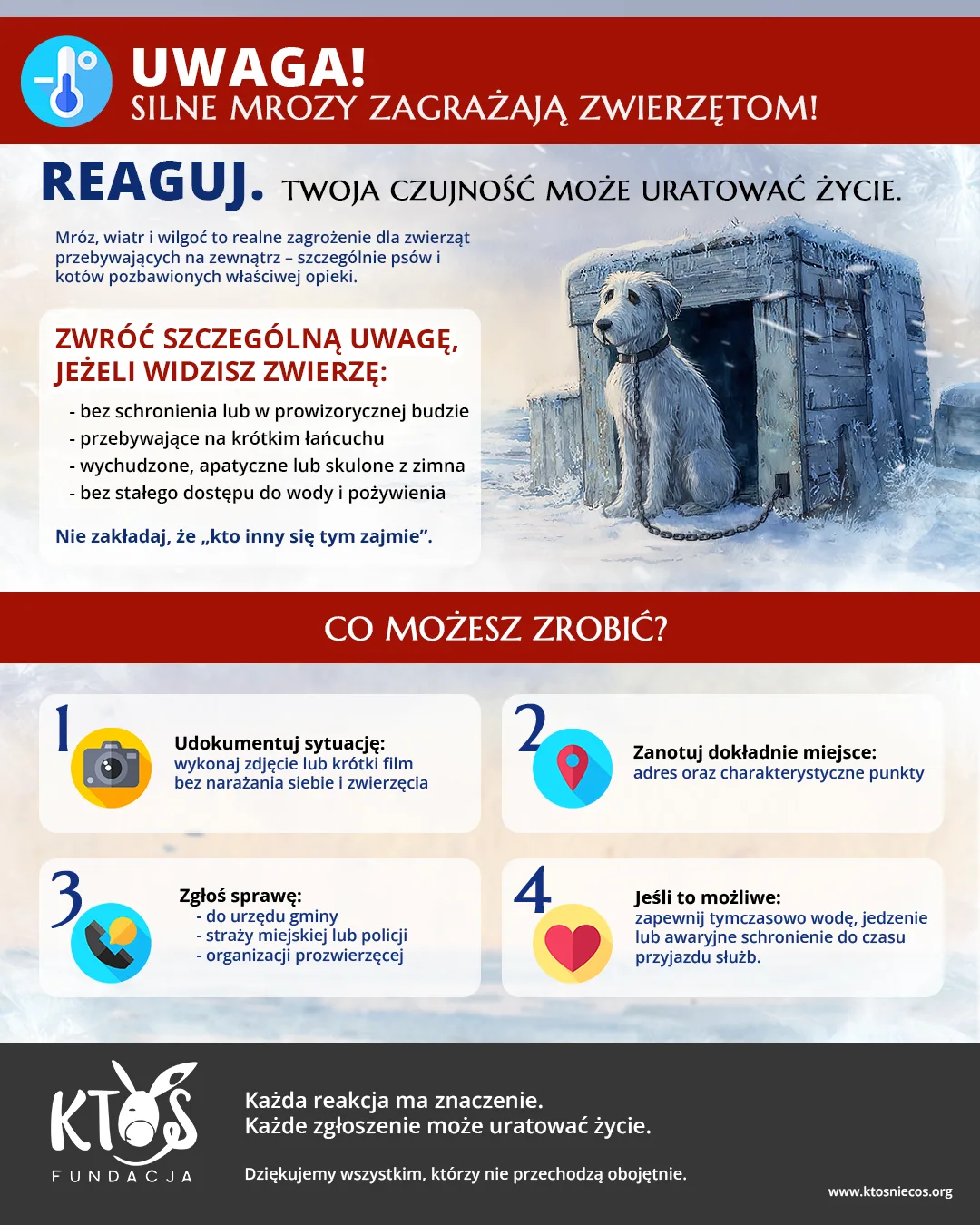


If you keep a dog outside, its kennel must really protect it from the cold — not “symbolically”, but effectively.
- Raise the kennel off the ground (e.g. on tyres or pallets) to insulate it from the cold, damp earth.
- The kennel walls should be double, with the space between them filled with insulation (e.g. polystyrene, straw or another insulating material).
- Line the inside of the kennel with straw — it is warm, insulates well and absorbs moisture (better than blankets or fabrics, which quickly get damp).
- Cover the kennel entrance with a flap (e.g. made of thick plastic, rubber or fabric) to keep the heat in and protect the inside from wind, snow and rain. A flap greatly improves the kennel’s insulation, and a dog will easily learn to use it.
- If the kennel does not have double walls, also cover it with a thick tarpaulin and protect it from wind and rain or snow.
- Around the dog’s neck: a collar — never a chain. A chain restricts movement, increases the risk of injury and makes the dog colder.
- Increase food portions — in winter the body needs more energy.
- Change the water often, because it freezes very quickly. No water is a real threat to life.
- Regularly let the dog off the chain into a run — movement warms the body and is essential for health. Under Polish law it is also your duty to let the dog spend at least 12 hours a day untethered!
- If possible, give the dog shelter in an outbuilding. If the house is “too big a step”, then at least a dry, sheltered space.
And most importantly:
Exposing a dog to freezing or to conditions that threaten its life or health is animal cruelty.
In Poland it is punishable by up to 3 years in prison, and in cases of particular cruelty — up to 5 years.